


Module 2:
Health Effects of Tobacco Use
Tobacco use is the leading cause of preventable death in the United States, killing over 490,000 people each year. In fact, in Texas alone, 28,000 adults die each year from tobacco-related illnesses. That’s 77 Texans per day!
Now that you know the different types of commercial tobacco products, let’s take a closer look at how they affect the body.
This module will cover:
● Health effects of combustible tobacco, smokeless tobacco, and vapes.
● Physical and mental health effects of nicotine.
● The difference between secondhand smoke and aerosol and thirdhand smoke
and aerosol.
As you read, think about how these health effects could impact the everyday life of someone who uses them, like playing sports, hanging out with friends, or focusing on school
COMBUSTIBLE TOBACCO PRODUCTS
As we learned earlier, combustible tobacco products like cigarettes, cigars, and hookah release over 7,000 chemicals when they are burned. Many of these chemicals are harmful and can lead to serious health problems over time.
The most common health effects of combustible tobacco products are:
● Heart disease
● Increased risk of stroke, which is a serious brain injury caused when part of the brain
doesn’t get the blood and oxygen it needs to work
● Cancer
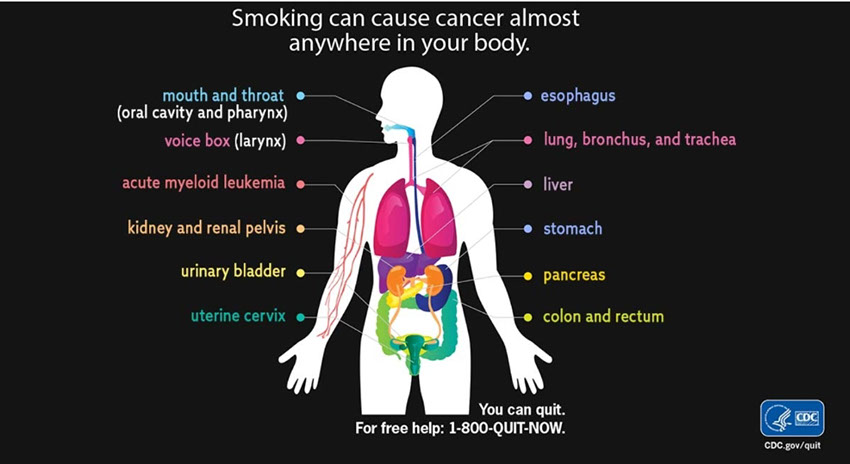
Smoking can also lead to lung diseases like COPD (Chronic Obstructive Pulmonary Disease). This disease can make it feel like you are breathing through a small straw. It also increases risk for respiratory infections like bronchitis and pneumonia and can make asthma symptoms worse.
The nicotine and other toxins in combustible tobacco products can make it harder for the body to respond to insulin. This increases the risk of type 2 diabetes.
Watch the video below from The University of Texas MD Anderson Cancer Center to see what happens to a smoker’s lungs.
HEALTH EFFECTS OF SMOKELESS TOBACCO
Smokeless tobacco products might seem safer because there is no smoke, but they can cause serious health problems, too. These products can cause gum disease, tooth decay, tooth loss, bad breath, and cavities.
Just like combustible tobacco, smokeless tobacco can also cause cancer. Leukoplakia, which are white or gray patches inside the mouth are not just “spots.” They can lead to cancer in the mouth, throat, cheek, gums, lips, and tongue. Smokeless tobacco also increases the risk of pancreas and esophagus cancer.
HEALTH EFFECTS OF VAPES
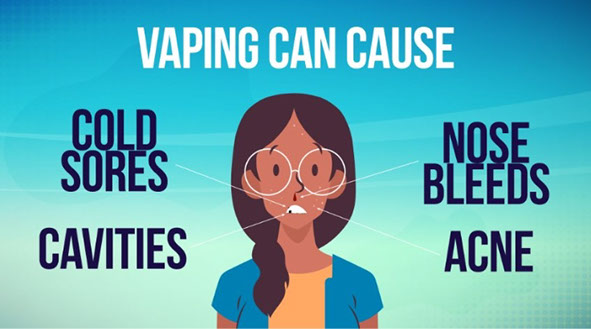
There is a common myth that vaping is safer than smoking, but that is far from the truth. Vaping exposes users to harmful substances, including heavy metals such as lead and nickel, and toxic chemicals like benzene and formaldehyde.
These chemicals can harm different parts of the body. Lead is known to cause heart problems and can affect memory and learning abilities. Nickel exposure is linked to lung problems and damage to the inside of the nose and sinuses. Benzene and formaldehyde are both known to increase the risk of cancer.
VAPING HAS BEEN LINKED TO:
Increased blood pressure and heart rate
Cancer
Breathing problems like asthma
Liver damage
Cavities
Tooth decay
Gum disease
Vaping can also cause serious lung diseases such as EVALI (e-cigarette or vaping
use-associated lung injury), which can cause chest pain, trouble breathing, and even require people to go to the hospital.
Watch the video below to learn how these chemicals can affect the body.
HEALTH EFFECTS OF NICOTINE
Physical Health Effects
Nicotine is found in all commercial tobacco products, and it can damage the immune system.
The immune system is the body’s defense team. It helps protect from germs, viruses, and infections. When nicotine is used regularly, it can weaken or depress the immune system. When the immune system is weakened, it becomes harder to fight off infections and illnesses. This means that something as simple as a cold or a minor respiratory infection can become more serious and take longer to heal.
For someone who uses tobacco products, this can mean getting sick more often and being at a higher risk for serious health problems.
Mental Health Effects
Nicotine is a highly addictive chemical. When nicotine enters the brain it attaches to special receptors that control the release of dopamine, a brain chemical that helps you feel happy.
We naturally release dopamine when we eat something delicious, listen to our favorite song, or achieve a goal.
Nicotine causes a strong burst of dopamine. At first, this may feel good, but over time, the brain starts to depend on nicotine to feel that same level of happiness. Activities like hanging out with friends or playing a game may not feel fun anymore. Nicotine can make a person feel like they need to use tobacco to feel normal or like they are having fun.
For teens, it is extremely dangerous because the brain continues to grow until about age 25. Young people who use nicotine are at a higher risk of having difficulty learning, focusing, paying attention, controlling emotions, and remembering information.
Watch the next video to learn more about how vaping affects the brain.
SECONDHAND SMOKE AND AEROSOL
Secondhand smoke is when someone who is not smoking breathes in smoke from a smoker’s exhale or the burning end of a combustible product.
Secondhand smoke can occur in public spaces like parks, sidewalks, restaurants, and stores. It can also occur in private spaces like cars, houses, and apartments.
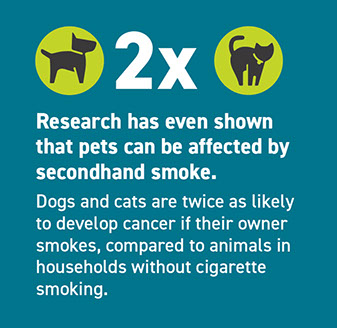
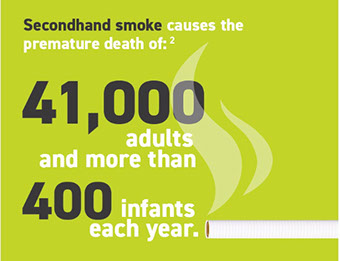
Many people who smoke or vape think they are only affecting themselves. However, their choices can also harm the people around them. This type of smoke exposes others to thousands of toxic chemicals and causes more than 41,000 adults and 400 infants to die each year. Secondhand smoke can also affect pets. Dogs and cats are twice as likely to develop cancer if their owner smokes.
Secondhand aerosol is when someone who is not vaping inhales the aerosol exhaled by a person who is vaping. Even though it may smell like fruit or candy, it still contains tiny particles and harmful chemicals. These dangerous chemicals can cause respiratory issues, heart disease, nicotine addiction, and harm a teen’s growing brain. Children and infants may also suffer from infections and asthma attacks.
THIRDHAND SMOKE AND AEROSOL
Thirdhand smoke is the toxic residue left behind after smoking a combustible tobacco product. It can stick to clothing, walls, and furniture. It can build up on surfaces like carpets, curtains, and car seats. This residue can also stay on surfaces for months or even years depending on how long and how often a person smoked in that environment.
Thirdhand aerosol is the chemical residue left on surfaces after vaping. Like thirdhand smoke, it can remain on surfaces for a long time, depending on how often a person vaped.
Thirdhand residue is harmful because people can:
touch it and absorb chemicals through their skin
breathe in tiny particles that are kicked up from surfaces
swallow particles when residue gets on their hands, food, or toys
The people most affected by thirdhand smoke and aerosol include:
● Pets,
● People who live with someone who smokes or vapes,
● Children and infants because they play on the floor and put their hands or toys
in their mouths.
WHY DO TEENS USE THEM?
You may be wondering why teens use these products if they are so harmful. Some people feel anxious, stressed, or depressed, and try using tobacco products to cope with or escape their feelings.
Others may be curious about the designs and flavors. Vapes are often packaged in bright colors or as high-tech designs that make them seem fun instead of dangerous. Friends, classmates, or older siblings might offer people a tobacco product, making it seem like “everyone is doing it.” People see influencers, music videos, and online streaming that make vaping look exciting, grown up, or relaxing.
Understanding these reasons is important because it helps us see why people would try such a dangerous product. In the next module, we will explore strategies to protect yourself and your peers to stay in control of your health and future.
Sources for module 2 include: The Mayo Clinic, American Lung Association, American Nonsmokers’ Rights Foundation, Thirdhand Smoke Resource Center



Training Module
Modules
Home
Say What! EST. 2011



Phone
512.245.8082
Mailing Address
Texas School Safety Center
ATTN: Say What Program
Texas State University
601 University Drive
San Marcos, TX 78666

Say What! was created and designed by young people from across Texas and connects students interested in eliminating tobacco from their schools and communities. The Say What! movement is funded by the Texas Department of State Health Services through a contract with the Texas School Safety Center at Texas State University.